Step 2 – Confirm your details in the EmaraTax dashboard.
Identify the taxable person
Confirm the taxable period you are filing for
Ensure that all your details are updated
Step 3 – Calculate the tax you owe.
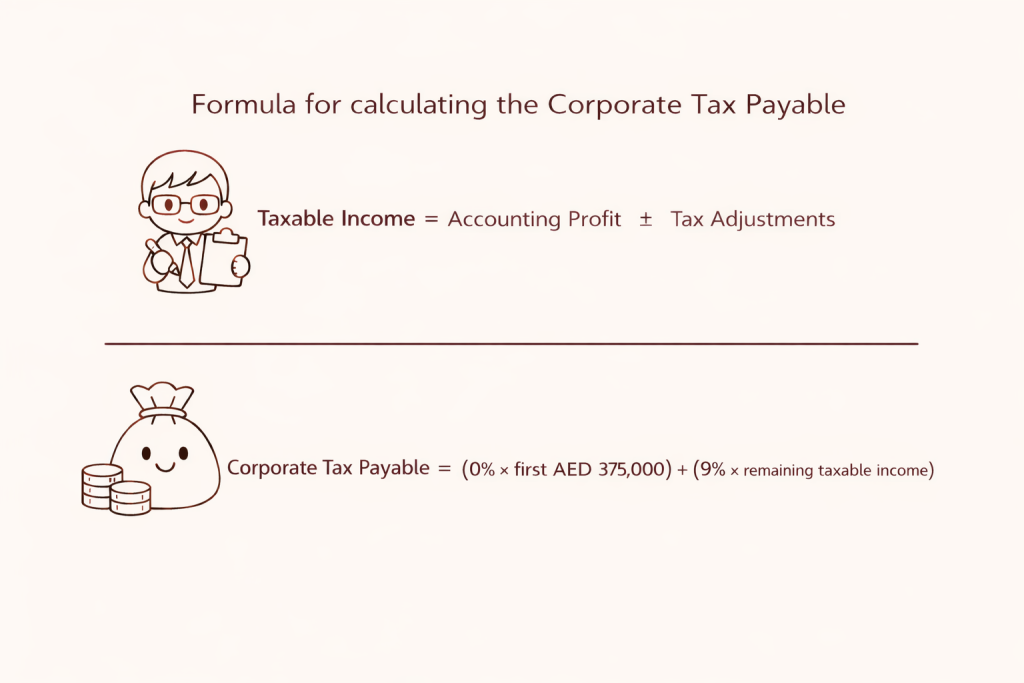
Apply applicable tax rate
For non QFZP: Below AED 375,000: 0% Excess of AED 375,000; 9%
For QFZP:
Confirm de minimis threshold first
Calculate 0% on qualifying income
Calculate 9% on nonqualifying income
Compute CT owed
Calculate your net income after taxes
For a negative taxable income or recording a loss in the filed returns, make sure that you meet the conditions.
The same person(s) must hold at least 50% ownership of the business from the loss year to the year it is used; OR
If ownership changes by more than 50%, the business must continue the same or similar activity.
There is no need for separate application, you just need to reflect it when filing.
When filing the corporate tax return with the Federal Tax Authority, you report the loss in the period where it occurred, specifically under the return fields for “Tax Loss Carryforward”
Step 4 – Complete the return in EmaraTax and attach the required documents.
Submit declaration
Pay the tax you owe in the same deadline
Maintain all relevant records and documents for 7 years following the end of the relevant Tax Period.
Note
As a general rule, Financial Statements must be attached unless the taxpayer has elected for Small Business Relief.
Other supporting documents may need to be uploaded where relevant, while many working papers should be retained and provided if requested.
Thank you!
We've received your request and will get back to you shortly.
We've received your request and will get back to you shortly.
Back to site
Thank you!
We've received your request and will get back to you shortly.
Back to site
We use cookies for analytics (Microsoft Clarity) to improve your experience on our website. By accepting cookies, you help us enhance our services. Learn more



 Thank you!



 Contact Us


