

Simplifying VAT Return Filing in the UAE (including changes in 2026 and how to prepare)
VAT has been part of doing business in the UAE since January 1, 2018, and…
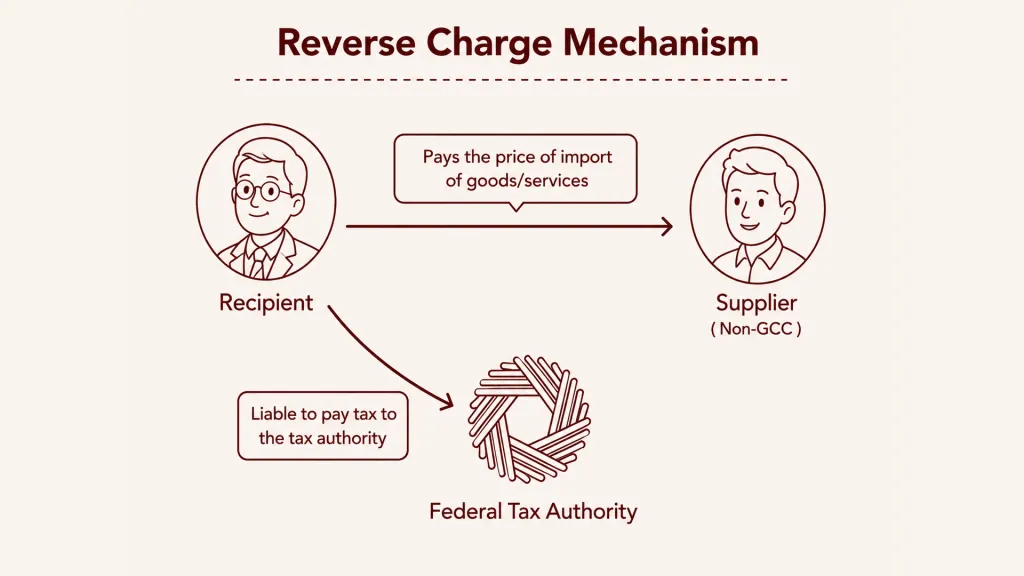
Reverse Charge Mechanism means the responsibility for reporting VAT shifts from the seller to the buyer. Instead of the supplier charging VAT on the invoice, the business receiving the goods or services calculates and reports the VAT itself in its tax return. This usually applies to imports or specific business-to-business transactions and helps ensure VAT is properly accounted for even when the supplier isn’t registered locally.
Under the reverse charge mechanism, the role is reversed — the buyer accounts for the VAT instead of the supplier.
The reverse charge mechanism ensures VAT is collected even when the supplier:
Imagine you are a UAE VAT-registered business:
In the UAE VAT tax system, RCM commonly applies to:
These specifics come from VAT law and executive regulations (Article 48 of Federal Decree-Law No. 8 of 2017 and related Cabinet Decisions).
To understand how the reverse charge supplies are treated in VAT return, you can refer to this table:
| Output VAT Scenario | Is the reverse charge treated as a deemed supply? | What the business must do |
|---|---|---|
| Imported services from non-UAE supplier | Yes | Report VAT as if you supplied it to yourself |
| Imported goods from abroad | Yes | Account for VAT on imports in your return |
| Certain local B2B sectors (e.g., electronics, oil, metals) | Yes (in specified cases) | Buyer accounts for VAT, not seller |
| Standard local sales | No | Supplier charges and reports VAT on sales |
To stay compliant, you must:
Once you understand these basics, the rest of the VAT return filing process becomes far more manageable. In principle, UAE filing is more about accurate reporting, ensuring consistency, clarity, and compliance.
Thank you!
We've received your request and will get back to you shortly.

Loading...
 Thank you!
We've received your request and will get back to you shortly.


 Contact Us


