


Simplifying VAT Return Filing in the UAE (including changes in 2026 and how to prepare)
VAT has been part of doing business in the UAE since January 1, 2018, and…
The UAE VAT Registration Certificate is an official document issued by the Federal Tax Authority (FTA) after a VAT registration application is approved.
Applications for mandatory registration must be submitted within 30 days of exceeding the threshold.
The VAT certificate serves as legal proof of VAT registration and may be requested for certain business, tax, or administrative purposes. The certificate is available through the taxpayer’s e-Services account dashboard.
A UAE VAT certificate has no “expiry date”; it is valid as long as your registration is current.
If information in your tax records changes, you generally must notify the FTA within 20 business days of the change through the Tax Records Amendment service.
In general, both natural persons and legal persons may register for VAT.
Note
Natural persons and legal persons carrying out an economic activity in the UAE can proceed with following the guidelines behind the VAT registration system.
The FTA expressly states that holding a trade licence is not an absolute prerequisite for the registration provisions to apply.
The certificate lists the business name in Arabic and English, its registered address, 15-digit VAT Tax Registration Number (TRN), registration date, VAT return periods and due dates, and the start and end dates of tax periods.
For some businesses with multiple registered establishments or branches, these details would appear under the taxpayer’s VAT registration.
Businesses need to check these details and report any changes to their tax registration.
VAT registration is necessary before a business can legally charge VAT and issue VAT tax invoices. The VAT certificate provides official evidence of that registration and confirms the taxpayer’s TRN.
The TRN allows customers, suppliers and business partners to verify the taxpayer’s VAT registration.
The certificate can also be useful when demonstrating VAT registration status during tax, customs, or other business processes.
Other possible use cases: Customs-related processes, bank or business KYC, and supplier or procurement for government contracts may require evidence of VAT registration.
For goods trading businesses, the VAT treatment can depend on where goods move, where they are consumed and whether the conditions for the relevant Designated Zone treatment are met.
When submitting a VAT registration application, the FTA may require:
Note
Specific free zones and customs-controlled areas supervised by Dubai Customs (such as JAFZA or DAFZA) are official Designated Zones.
Businesses registered with Dubai Customs have a service specifically for requesting a VAT Registration Certificate, so the document can be relevant to certain customs processes. You can check out the service here.
In our experience, the FTA typically processes VAT registration applications in 5 to 20 business days. Once the registration application is approved, the VAT registration certificate will be available in the dashboard of the taxpayer’s e-Services account.
Incorrect details on your certificate must be notified to the FTA within 20 business days.
To start the VAT registration process click “Start Service” or scan the QR code in the website (here) to access it via your phone.
After registration, you can download your VAT certificate any time using the following steps:
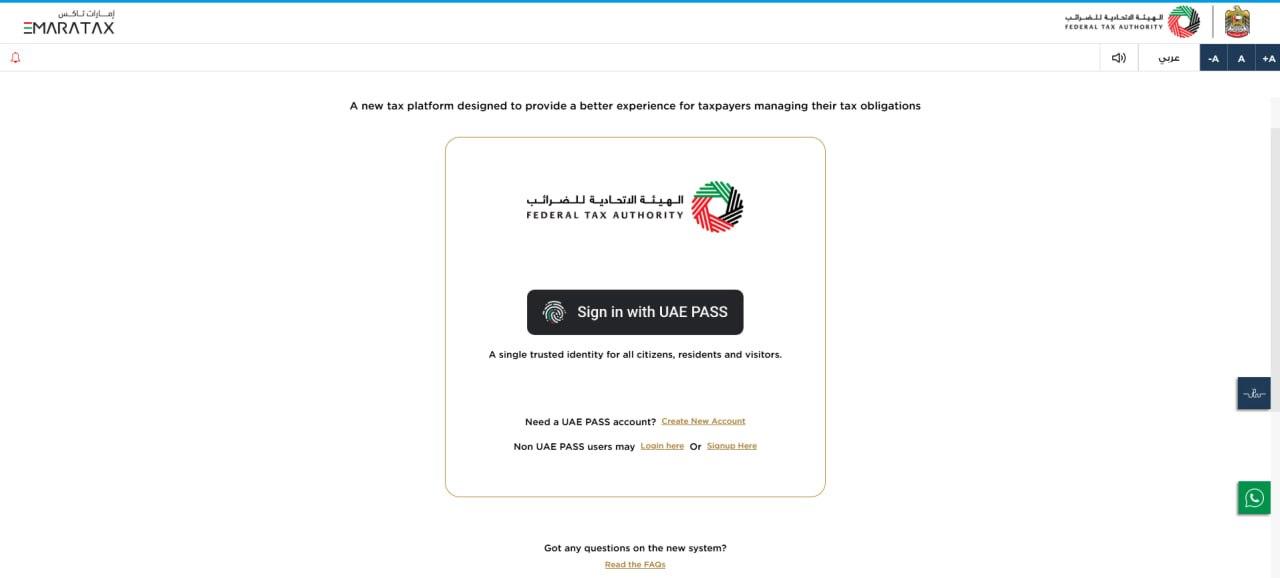
Step 1: Log in to the EmaraTax platform using your registered credentials. You can also use your UAE pass.
Step 2: Open the Taxable Person Profile. Make sure you are looking at the correct company or taxpayer if you manage multiple accounts.
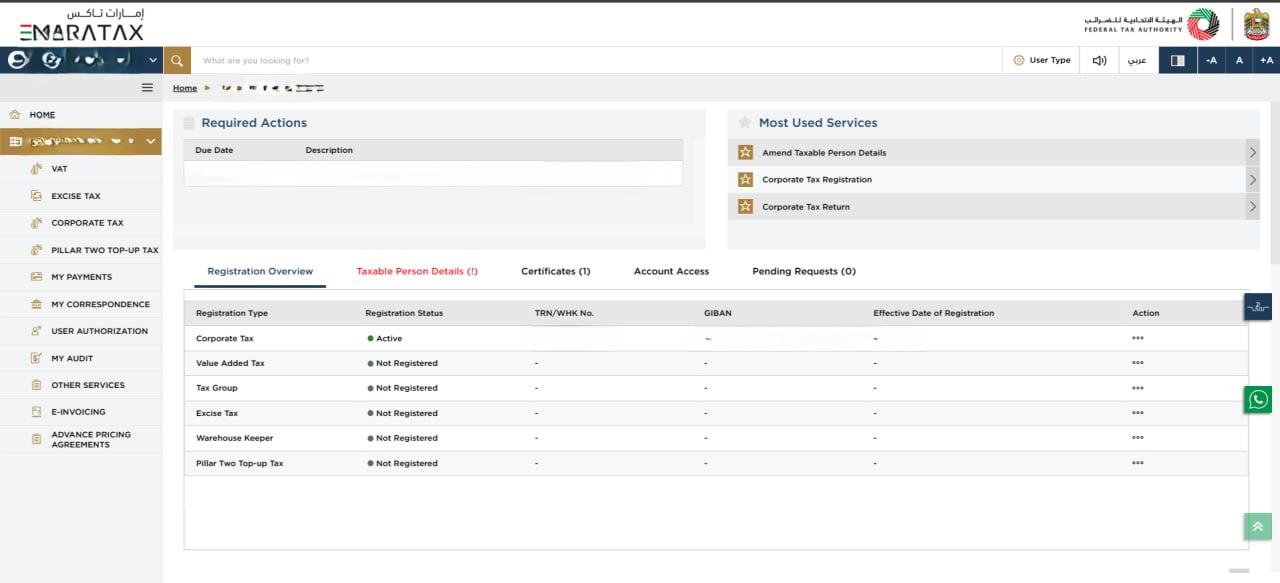
Step 3: Once the VAT registration application is approved, the VAT registration certificate should be available in the dashboard of the taxpayer’s e-Services / EmaraTax account.
Open the relevant Taxable Person account and download the certificate from the available certificates.
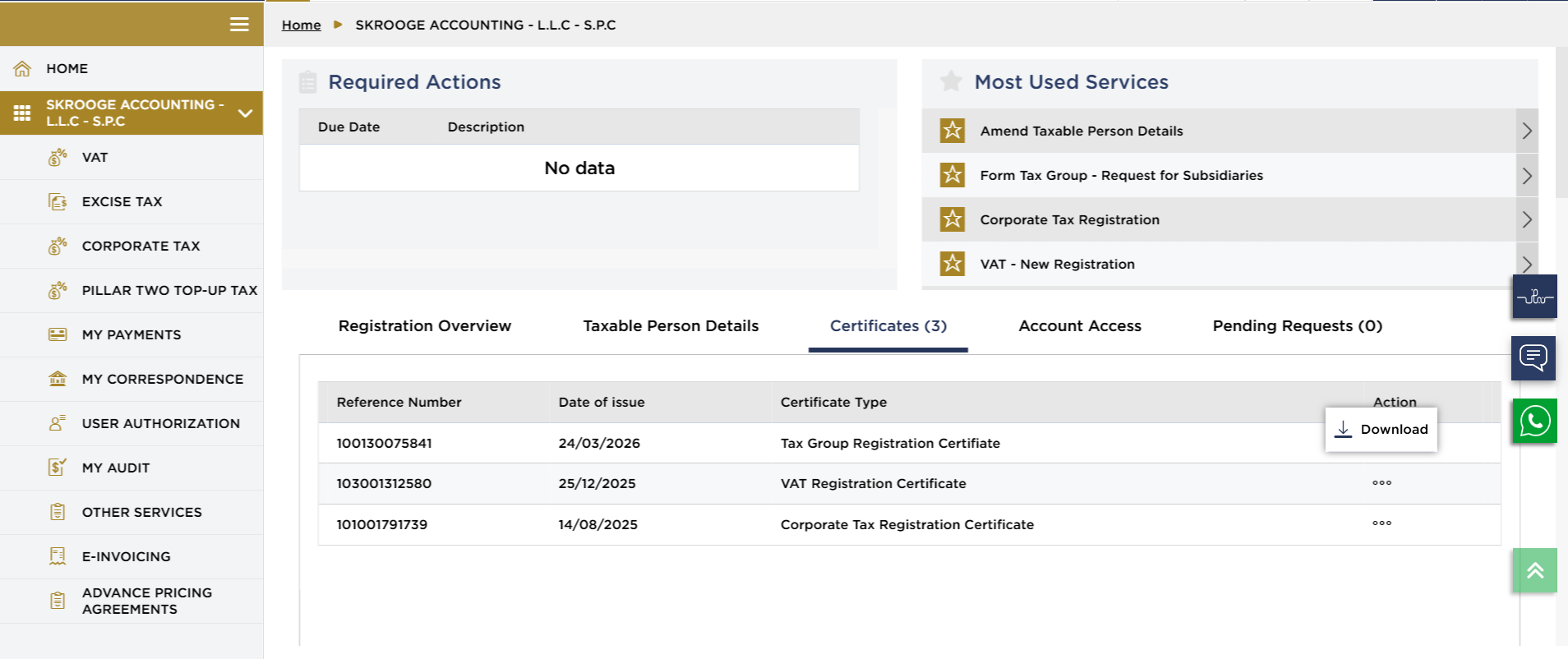
Step 4: Download and save.
Select the VAT certificate and save a copy for compliance and documentation. Make sure the latest version is always accessible to your finance or accounting team.
The FTA’s current service information gives an estimated processing time of 20 business days after you have completed your VAT registration application.
If the certificate does not appear after the application has been approved, check the relevant Taxable Person account in EmaraTax and contact the FTA if the issue persists.
Missing certificates may result from technical migration or account-related issues.
The applicant is required to complete the necessary information and attach the supporting documents upon registration, based on the legal form of the entity (whether a natural person or a legal person).
Check out our main VAT registration guide to see the full documents required for a successful application.
The FTA specifically requires taxpayers to ensure the accuracy and correctness of information submitted during registration.
Thank you!
We've received your request and will get back to you shortly.

Loading...
 Thank you!
We've received your request and will get back to you shortly.


 Contact Us


