

Simplifying VAT Return Filing in the UAE (including changes in 2026 and how to prepare)
VAT has been part of doing business in the UAE since January 1, 2018, and…
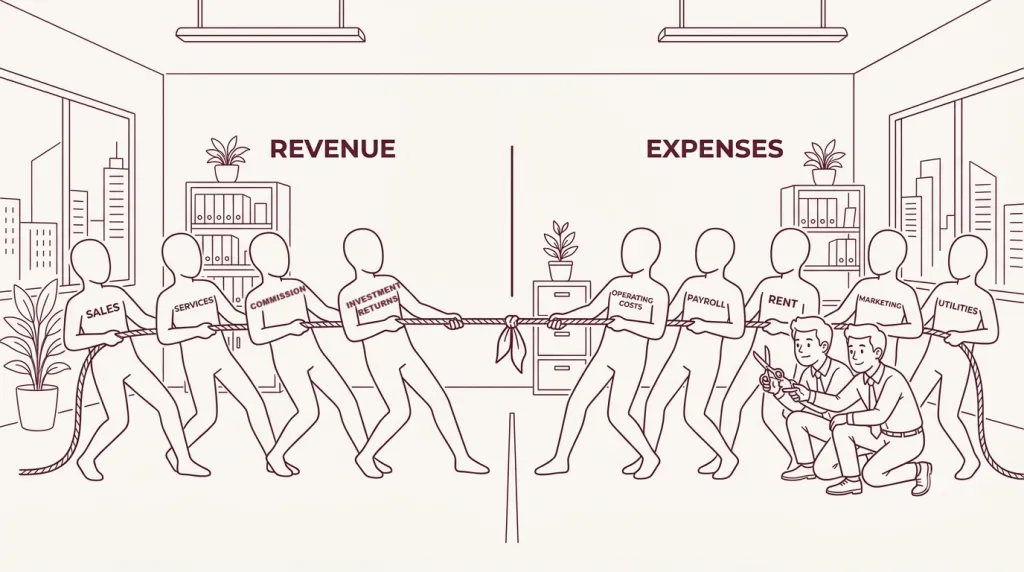
Cost-cutting does not necessarily mean spending less across the board. For UAE businesses, the better approach is to identify costs that can be reduced without weakening productivity, compliance, or growth.
For some businesses, cost-saving opportunities may lie in adopting a leaner workforce. For others, it may require vendor contract renegotiations. After an internal audit, many businesses may discover that relocating to a smaller office can materially reduce their occupancy costs. Some businesses may find great value in the budgeting functions of corporate cards.
There are numerous cost levers you can adjust to improve your business’s profitability. In this article, we will explore a structured approach to identifying cost-saving opportunities for your business.
Cost discipline is sometimes overlooked in the UAE because of the country’s pro-business environment, competitive tax policy, strong infrastructure, and access to regional markets. But if you look at the flip side, the numerous advantages of doing business in the UAE attract tough competition. At the very least, you must stay on top of UAE-specific challenges like:
If you have registered with the Federal Tax Authority (FTA) for Value Added Tax (VAT), you can recover a part of your operating costs. Specifically, most businesses can recover the VAT paid to produce goods and services that attract a 0% (zero-rated) or 5% (standard-rated) VAT. Input VAT recovery also depends on valid tax invoices, correct VAT treatment, and whether the expense is linked to taxable supplies.
Want to know how to file VAT returns? In a previous article, we covered how businesses can maximize input VAT recovery and minimize the possibility of FTA penalties when filing VAT returns.
As a major global trade hub with a broad range of suppliers and service providers, the UAE offers businesses a wide choice of goods and services. The abundance of choice makes it challenging to decide what’s frivolous spending and what supports your revenue.
The UAE’s federal tax framework has expanded significantly since 2018, when VAT was introduced, followed by Corporate Tax for financial years beginning on or after 1 June 2023. So, the tax legislation is very new, and new laws and procedures are still being added. A recent example of this would be e-invoicing. Hence, businesses must find a compliance partner that can help them keep up with the evolving tax procedures.
Effective cost management works best when it is treated as an ongoing process rather than a one-time exercise. The steps below cover the main cost drivers businesses can review, from manpower and infrastructure to procurement, technology, and cash flow.
Before you begin cancelling orders, restructuring different departments, and downsizing your office, you should map your costs. This means studying your spending patterns, linking each cost to its origin, and understanding the impact of each expense on your revenue. Such cost analysis will ensure that you cut down on unnecessary expenses without disrupting key business processes.
Regular cost audits can also help identify unused tools and expenses that deliver little return on investment.
Cost mapping begins with classifying expenses as overhead costs and variable costs, followed by determining whether a variable expense creates an equally valuable impact on the P&L, and whether an indirect cost is a necessary expense for smooth business operations, or is it an unnecessary cost.
A detailed audit of travel expenses can reveal recurring spending patterns and opportunities to reduce costs without affecting essential trips. Reducing unnecessary business travel can also contribute to overall profitability.
Labor costs can make up a large portion of overhead expenses in the service and tech industry. The same can be said when skilled labor is needed for production, distribution, or any other business function. Hence, businesses often look for ways to maintain an appropriately sized workforce.
A good way to balance the need for a large enough workforce and the need to manage costs could be remote work. Depending on the function and operating model, outsourcing certain activities or maintaining remote teams may reduce employment and office-related costs. Hybrid and remote work models can also reduce the amount of office space a business needs, lowering real estate overhead.
When you are looking at manpower costs, in addition to salaries, you need to consider benefits like end-of-service gratuity. Although some employers may attempt to reduce these costs through high employee turnover, this can undermine employee morale, increase recruitment and training costs, create operational risks, and introduce change management complexities.
Like labor, office-related expenses are major cost drivers, particularly office rent and utilities. For most businesses, lease negotiations can have a significant impact on the cost structure. One way to control costs as a free zone business would be to opt for a flexi-desk arrangement if your free zone authority permits it. In a similar vein, small agencies can control costs by opting for co-working spaces.
If your business is involved in manufacturing or tech, you will also need to be mindful of energy consumption. In such cases, periodically performing energy audits is crucial to identify areas where energy is being wasted. Investing in energy-efficiency measures can then help lower utility bills over the long term.
If you have registered for VAT, input VAT recovery will form a key part of your cost-cutting efforts. Businesses should properly identify and document deductible expenses for Corporate Tax purposes, subject to applicable limitations. Another consequence of incorrect tax filings that you should be careful of is FTA penalties.
If you are involved in trading and/or manufacturing, controlling procurement costs is very important. Negotiating better pricing in vendor contracts should be a core priority for you.
As vendor costs change over time, renegotiating contracts at least once a year can help prevent businesses from carrying outdated pricing. A 90-day review cycle can help businesses revisit their spending, renegotiate costs, and cut expenses that no longer appear necessary.
If you have sufficient visibility regarding future sales, requesting bulk discounts may be realistic. This may require consolidating suppliers. A by-product of consolidating suppliers can be the reduction of administrative overhead by simplifying purchasing, invoicing, and vendor management.
Another strategy for controlling the cost of goods sold could involve choosing smaller vendors who would be more open to lower prices and favorable payment terms. Such vendors may also prioritize your orders and save time for you with efficient delivery, provided that their operating scale is appropriate for your order size.
You can also explore extended payment terms to ease pressure on working capital and improve cash flow.
Maintaining a few backup suppliers can help mitigate the risks that come with relying too heavily on a consolidated vendor base.
Technology can help you reduce costs in three ways. Firstly, tech products like cloud ERP can help you monitor and evaluate your business processes. This helps identify inefficiencies, reduces waste, and improves productivity. Secondly, you can use tech to automate repetitive tasks such as data entry to improve efficiency. One example of this is e-invoicing, which the UAE is introducing through a phased mandatory implementation. E-procurement software can similarly automate purchasing workflows.
Expense management products like corporate cards represent another way tech can help you minimize costs. For instance, virtual cards can give businesses tighter control over travel-related spending. In a previous article, we explored how corporate cards can help you enforce budgeting decisions and unlock valuable discounts and offers.
If improving cost efficiency has become critical for your business, you must simultaneously keep an eye on your working capital efficiency. In periods of high cost pressure, maintaining sufficient liquidity to service new orders can be challenging.
For instance, you can employ strategies like just-in-time inventory (JIT) that improve cash flow. However, JIT inventory and other cash flow improvement measures that rely on smaller, frequent orders can get in the way of cost reduction strategies centred around volume discounts.
Because of such trade-offs, it is important for businesses to simultaneously optimize cash flows and costs instead of tackling these problems in isolation.
If debt has become a significant monthly cash outflow, you could attempt consolidating loans to lower interest costs and reduce the number of monthly obligations.
Cutting costs only matters if the savings translate into better business performance. At the company level, most businesses will already have an eye on the net profit margin, which measures overall profitability after all expenses. However, you should also pay attention to granular details that reveal how the relationship between different expenses and your revenue has changed. For instance, at the operational level, you can track labor productivity to assess whether output per labor hour has improved after cost reductions.
A type of overhead cost that’s difficult to link with a business’s ability to generate revenue would be the fee paid to accounting firms for accounting, bookkeeping, and tax filing services. Hence, such costs can seem like an easy cost lever to reach for. However, cutting back on accounting and bookkeeping expenses is not always a smart cost-cutting measure.
Firstly, if your business doesn’t have sufficient bookkeeping support, audits will become challenging, and your exposure to FTA penalties increases. Secondly, if your books do not receive adequate attention, you will struggle to connect operational KPIs with financial performance since you’ll lack granular financial data.
That doesn’t mean you must splurge on basic accounting and tax support. Skrooge offers a cost-efficient Accounting & Tax package that starts at just AED 499 per month and includes tax filings, transaction capture, reconciliations, and monthly financial reports. Get an estimate for the Accounting and Tax package based on your transaction volume on this page.
Diligently mapping your costs to their sources and impact on revenue will form the basis for an effective cost-cutting strategy that reduces operational costs without affecting growth. This method will help you identify cost-saving opportunities that do not hamper service delivery.
There is no reliable statistic identifying the biggest hidden cost across UAE businesses. Common areas worth reviewing include office costs, business travel, labour, software subscriptions, and other recurring overheads.
Depending on the business activity and applicable employment and immigration requirements, businesses may reduce certain manpower-related costs through outsourcing or suitable remote and flexible work arrangements.
Realistically, it is often not possible to reduce rental costs without relocating. The only exception could be opting for a smaller office space when you are renting floors or certain rooms in a large office building.
Automation doesn’t just improve cost efficiency. It also frees up your employees for more mission-critical tasks.
Thank you!
We've received your request and will get back to you shortly.

Loading...
 Thank you!
We've received your request and will get back to you shortly.


 Contact Us


