


Simplifying VAT Return Filing in the UAE (including changes in 2026 and how to prepare)
VAT has been part of doing business in the UAE since January 1, 2018, and…
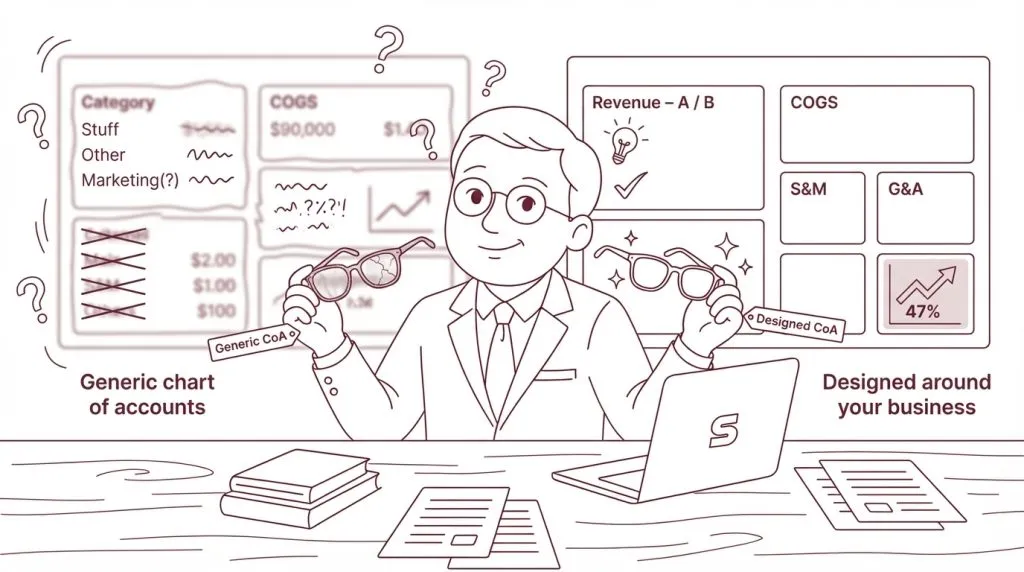
An average accountant will simply categorize transactions into the chart of accounts you give them.
A great accountant will first understand your business and how you look at it – your model, unit economics, decision-making – and then design the chart of accounts around that.
He might even suggest new ways of slicing your business you haven’t thought about yet.
If the chart of accounts is done poorly, you don’t just get useless or ugly reports.
You get a distorted picture of reality.
It’s like flying a plane with a miscalibrated altimeter: the numbers are there, but they’re lying to you.
Your categories should be:
Rule of thumb:
Your main products / services / items should have:
So you can see true margins per stream, not just a blended number.
At minimum, separate:
From there you can add more slices that matter for unit economics and ROI, for example:
At Skrooge, we don’t just “bookkeep.” We sit with you and design the chart of accounts together, so every line in your P&L actually reflects how your business works.
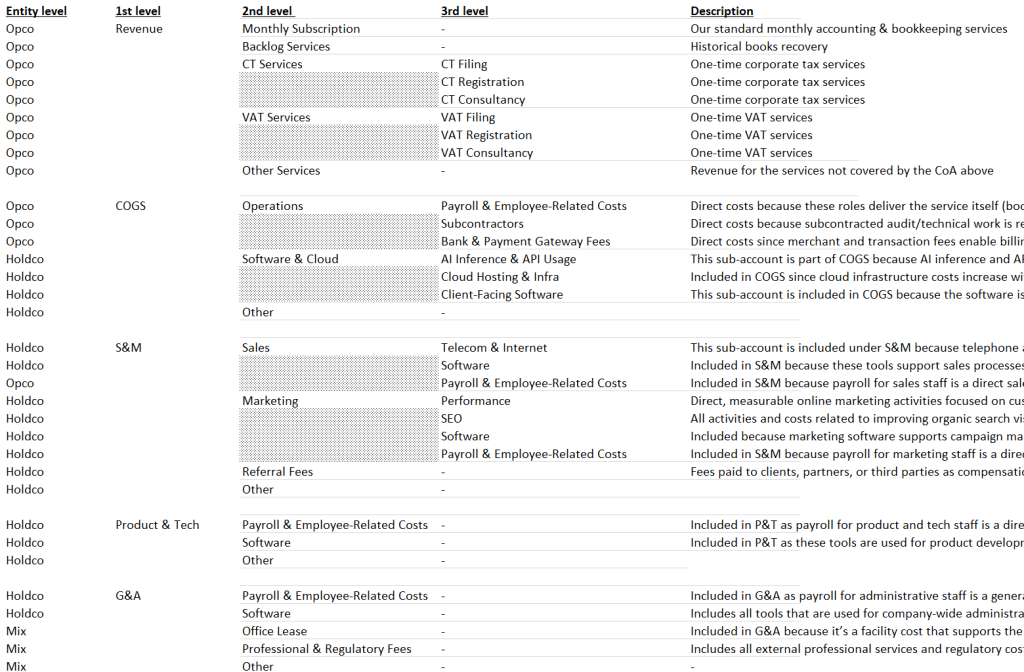
Please find below as an example the simple chart of accounts we came up for our 2 companies – we tried to follow the principles above that I mentioned.
Thank you!
We've received your request and will get back to you shortly.
Loading...
 Thank you!
We've received your request and will get back to you shortly.




 Contact Us


