VAT Filing in the UAE
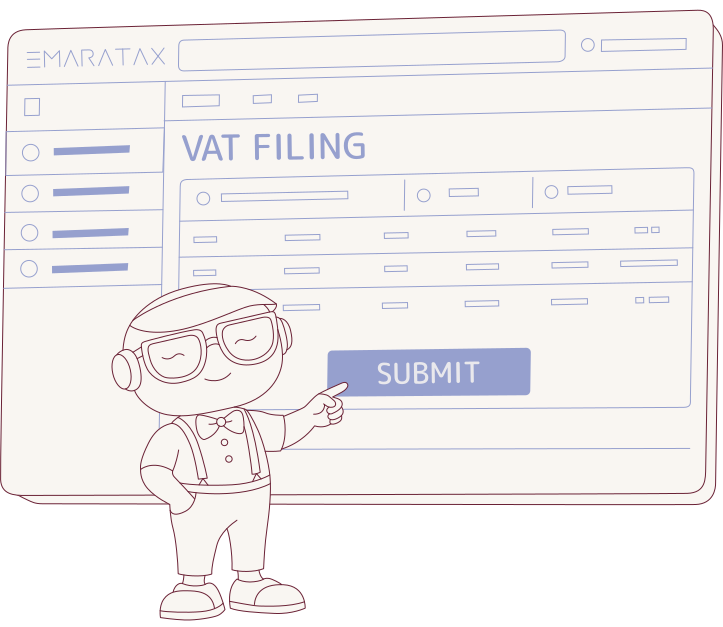
Accurate, on-time VAT returns filing based on properly tagged
data—so you avoid penalties and never guess your payable VAT.
Loved By Entrepreneurs
Success stories from
businesses like yours

My Bestie Entertainment
Excellent accounting firm with strong expertise in VAT, audit, corporate tax, and AML compliance. Very professional, responsive, and reliable-everything is handled accurately and on time. Highly recommended
Thank you guys !
Yakovets Unity
More Less


Since September, we switched to using Skrooge.ai for accounting, and it’s been a genuinely great experience. They’ve automated a lot of the process in a smart way, using AI, so everything feels clear, fast, and easy to manage. Most of the invoices are grabbed automatically from our emails and we don't have to think about it. The team is professional, very detail-oriented, and consistently improving their system.
We’re happy to be working with them across our two businesses, Eco Mind Cafe and Eka Mai Holistic Yoga (Port de La Mer, Dubai), and we would confidently recommend them.




Skrooge.ai delivers highly professional accounting and tax services in the UAE through an advanced, AI-powered system that ensures accuracy, efficiency, and full regulatory compliance. Their technology-driven platform brings transparency and automation to accounting and VAT processes, significantly improving turnaround time and reliability. We would like to specially recognize Kirill, Anatoly, and Sohail for doing an exceptionally fantastic job. Their professionalism, responsiveness, and hands-on support truly reflect the firm’s high standards and commitment to excellence. We highly recommend Skrooge.ai as a trusted, forward-thinking, and AI-enabled accounting and tax partner for businesses operating in the UAE.



Amazing product and very involved professional team that is always online and ready to help. Skrooge is the best option for accounting when you are on your way to boost your business.
Yakovets Unity
More Less

Very nice and professional service.
BC Brands
More Less
I recently started working with Skrooge and my experience so far has been absolutely seamless. They have good onboarding, account management and SOPs. I was looking for a firm that is responsive, available, reliable and cost-effective and Skrooge is all of these. Highly recommend working with them.


Who it’s for

Your VAT filing is coming up, and you’re unsure what to include or claim, how to handle pre-registration costs, or whether the invoices you issue or receive are compliant.

You’ve been filing “based on spreadsheets” or incomplete books and want to de-risk audits and penalties.
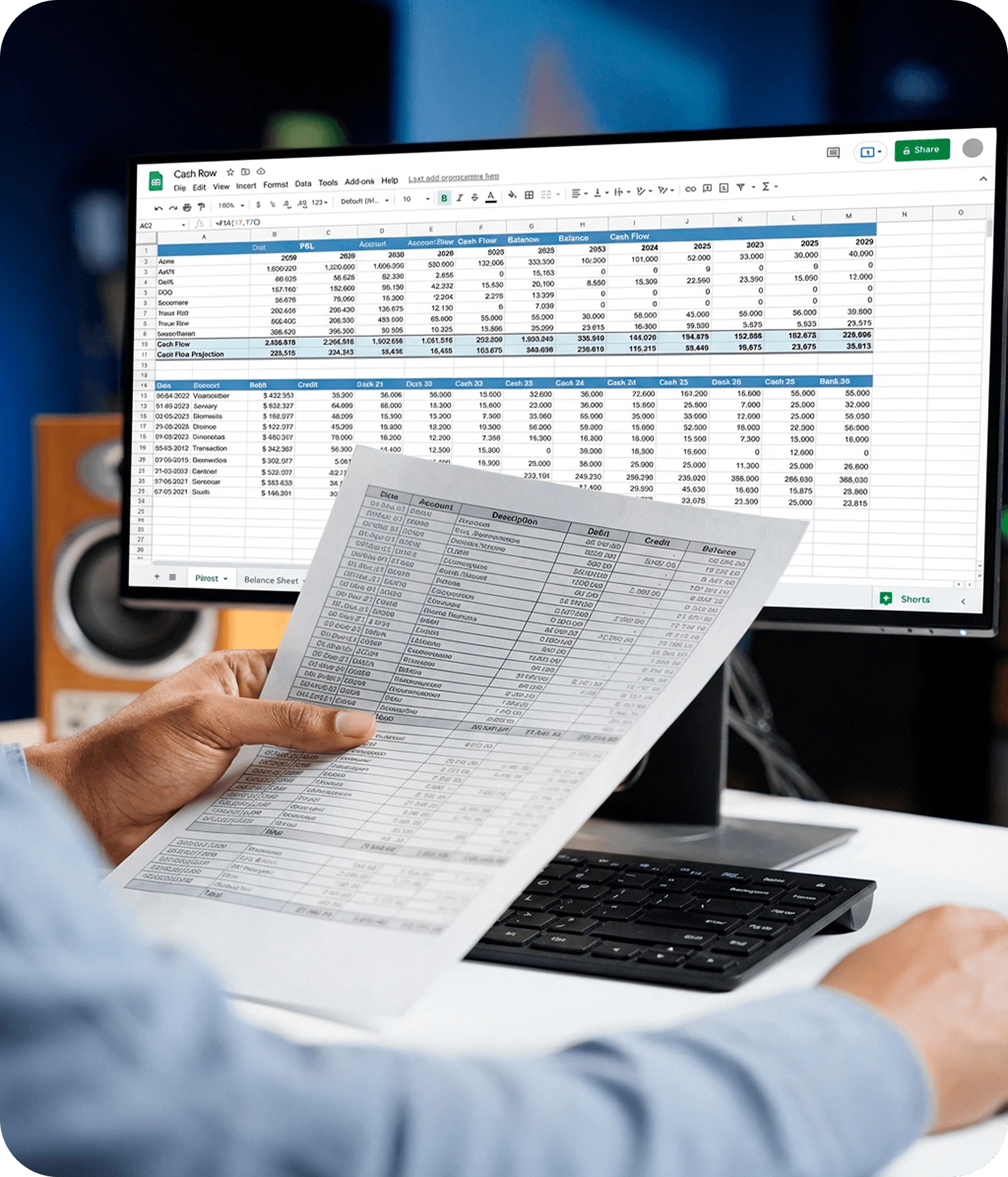
You’re using multiple systems (POS, Stripe, banks, etc.) and need someone to consolidate and reconcile for filing.
What you get

VAT Health Check
Verification of the correct VAT treatment & compliance of the sample of transactions & supporting documents.

Backlog accounting
If needed in case the VAT Health check wasn't passed (priced separately).

VAT return prep & filing
We will file the VAT return via the EmaraTax portal under your authorization.
Why it matters?
Deadline: VAT filing & payment are due within 28 days from the end of your Tax Period.
If you didn’t file (and didn’t pay):
- Fixed 1k-2k AED penalty for late filing.
- Plus % penalties on unpaid VAT - starting at 2%, then climbing with 4% per month after the first month, reaching maximum 3x the unpaid amount.
If you filed incorrectly:
- The same % penalties apply as above on unpaid VAT
- Plus a penalty of up to 50% on the unpaid amount (when errors are identified by the FTA).
Why Skrooge


Fast and founder-friendly
Clear checklist, minimal back-and-forth, explanations in normal language - not copied law articles.

Designed for UAE reality
Exempt vs Zero-rated Supplies, Designated Zones, invoice compliance, cross-border flows—handled daily, not occasionally.

One source of truth
Books, VAT, and CT are aligned; no contradictions for FTA or investors.

How we work

Timing: We typically file the next
day after
receiving all necessary
data and access.
Access & scope
We confirm the VAT period, get EmaraTax
access/authorization and data sources.
Data request & VAT Health Check
We collect financial reports for the quarter and a sample of
supporting documents. We'll flag issues and recommend
Backlog Accounting (if needed).
Draft & approval
We prepare the VAT return and a simple
explanation; you review and approve.
Submission
We file on EmaraTax on your behalf
and keep records ready for audits.
Included in Accounting
& Tax Package
Your VAT filing on autopilot, at no extra cost, with 100% of transactions/documents checked:
- We tag all sales/costs to the correct VAT buckets and verify tax compliance for every invoice as we process each transaction (vs. a sample check for standalone filing).
- We start pre-registration so the eligible input VAT is ready to claim in your first return.
- At filing time, we skip steps 1–2 (access & data request) to keep filing seamless and included at no extra cost.
Where we operate
We support businesses across the UAE.
- Mainland: Dubai, Abu Dhabi, Sharjah, Ajman, RAK, UAQ & Fujairah
- Free Zones: DMCC, JAFZA, DIFC, ADGM, Meydan, RAKEZ, etc
Frequently
Asked Questions
Still have questions? You can
email us on info@skrooge.ai
or
submit your request
What is a VAT return in the UAE?
In the UAE, goods and services (collectively referred to as supplies) are either VAT-exempt or they attract a Value Added Tax (VAT) of 0% or 5%. VAT returns are meant to report the value of VAT taxable supplies and the business’s VAT liability.
How to file VAT return in the UAE?
Your business must first complete its VAT registration, create an e-service account with the Federal Tax Authority (FTA), [submit all the necessary documents](https://skrooge.ai/blog/zero-rated-supplies-in-uae/#:~:text=VAT%20Registration%20Process), and wait to receive its VAT Tax Registration Number (TRN). Then, you can file VAT return online through EmaraTax.
What is the VAT filing period in the UAE?
You must file VAT return within 28 days from the end of your tax period. Businesses with an annual turnover of less than AED 150 million file quarterly VAT return, but other larger businesses must file monthly.
How do I use the FTA online portal for VAT filing?
You can file VAT return online through EmaraTax, FTA’s online portal, if you have an e-service account and a VAT TRN.
What are the VAT filing charges in the UAE?
There are no charges for filing VAT return in the UAE, but if you file late, you will have to pay a penalty of AED 1,000 for the first offense.
How do I calculate input and output VAT for filing?
In the standard method to apportion input tax, a key step in calculating recoverable input VAT is identifying the input VAT attributable to taxable supplies, exempt supplies, and the shared overhead. Then, you must calculate a recovery percentage by dividing the taxable supplies VAT by the sum of taxable and exempt supplies VAT. The recovery percentage must be adjusted to the nearest whole number. Finally, you can multiply the recovery percentage by the shared overhead VAT and add the result to the taxable supplies VAT to arrive at the total recoverable input VAT.
What are the documents required for VAT filing?
You will need to fill out and submit the form VAT 201 when you file VAT return.